In the rapidly expanding international wellness market, the transition from “alternative remedy” to “industry standard” is a significant milestone.
As B2B wellness sectors—including corporate health programmes, luxury hospitality, and integrative medical clinics—seek out vetted, results-driven modalities, Shiatsu has emerged as a frontrunner.
At Norma Shiatsu Croydon, I have witnessed how the professionalisation of this ancient art is meeting the sophisticated demands of the modern global trade.
For the readers of apac-usa.com, staying ahead of wellness trends means looking at the certifications and clinical outcomes that define a “professional” therapy.
Shiatsu is no longer just a niche practice; it is a globally recognised specialisation with a projected market growth that reflects its utility in treating modern industrial ailments like chronic stress and ergonomic strain.
Points of Release
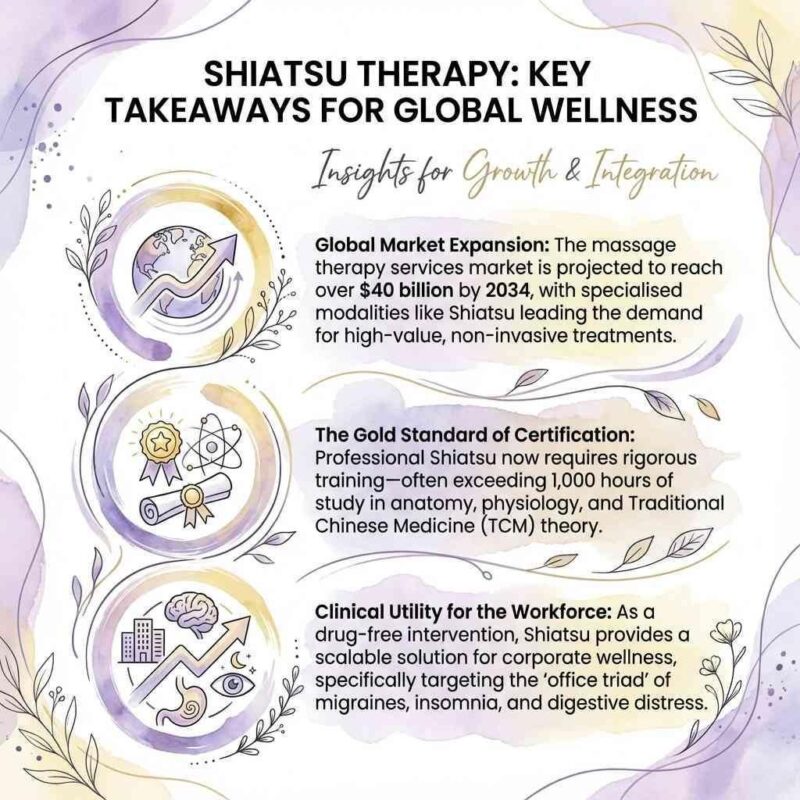
- Global Market Expansion: The massage therapy services market is projected to reach over $40 billion by 2034, with specialised modalities like Shiatsu leading the demand for high-value, non-invasive treatments.
- The Gold Standard of Certification: Professional Shiatsu now requires rigorous training—often exceeding 1,000 hours of study in anatomy, physiology, and Traditional Chinese Medicine (TCM) theory.
- Clinical Utility for the Workforce: As a drug-free intervention, Shiatsu provides a scalable solution for corporate wellness, specifically targeting the “office triad” of migraines, insomnia, and digestive distress.
The Professionalisation of Touch
The “Professional Edge” in the current wellness trade is defined by standardisation.
Organisations like the International Shiatsu Network (ISN) and national bodies, such as the Shiatsu Society in the UK, have established strict codes of ethics and educational benchmarks.
This shift ensures that when a B2B partner integrates Shiatsu into their service portfolio, they are providing a therapy that is as structurally sound as it is energetically restorative.
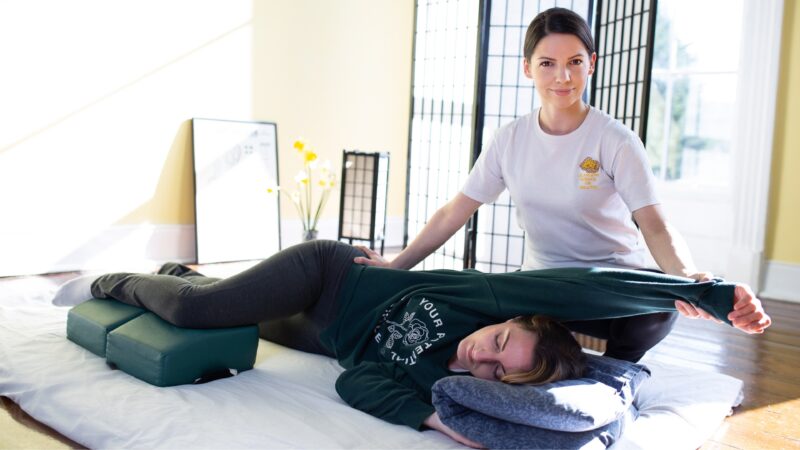
Unlike general relaxation massage, a certified Shiatsu practitioner is trained to conduct a detailed “hara” (abdominal) assessment to identify energetic imbalances before they manifest as physical illness. This diagnostic depth is what classifies Shiatsu as a preventative healthcare tool rather than a luxury amenity.
A Remedy for the Modern Professional
The global wellness trade is increasingly focused on non-invasive cures for chronic ailments that decrease productivity. In my practice, I often work with professionals who utilise Shiatsu as a targeted remedy:
- Migraine Management: By addressing the Gallbladder and Liver meridians, Shiatsu interrupts the cycle of vascular tension that triggers severe headaches.
- Sleep Optimisation: Through the stimulation of the parasympathetic nervous system, Shiatsu helps resolve the “tired but wired” state of insomnia.
- Digestive Resilience: As my client KPS noted during their “healing journey”, the gentle but firm pressure of Shiatsu can soothe the enteric nervous system, aiding those with stress-related digestive issues.
B2B Growth and Specialisation
For wellness brands and health-tech platforms, the integration of Shiatsu represents a commitment to Integrative Resilience.
We are seeing a rise in “Shiatsu-based” wellness technology and corporate partnerships because the modality is inherently safe, requires no oils, and can be performed in various settings.
As I often tell my students at Norma Shiatsu Croydon, the goal is to move from “crisis management” to long-term patient support.
This is the hallmark of a professionalised industry: the ability to provide consistent, high-quality outcomes that align with international health standards.
Conclusion: The Future of Holistic Trade
The professionalisation of Shiatsu is a win for the entire wellness ecosystem. It provides practitioners with a sustainable, ergonomic career path and offers the B2B sector a certified, effective remedy for the global “stress epidemic”.
Adding Shiatsu to a professional repertoire isn’t just an expansion of services—it’s an investment in a global standard of excellence.
South London’s premier sanctuary for professional structural release is here.
Because your body deserves some of the best Japanese Massage London has to offer, visit our website to secure your session today.
About the Author
This article was brought to you by Norma Powell, a dedicated Shiatsu practitioner at Norma Shiatsu Croydon.
Norma specialises in bridging the gap between traditional Japanese bodywork and modern professional standards, providing nurturing treatments that support both individual health and industry-wide excellence.
Frequently Asked Questions
Is Shiatsu certification recognised internationally?
Yes, most major countries have national federations that align with international standards, ensuring that a practitioner’s training in anatomy and TCM is transferable across borders.
Why is Shiatsu considered more “professional” than standard massage?
While both have value, Shiatsu’s requirement for extensive training in meridian theory and diagnostic assessment allows for a more clinical, targeted approach to chronic health conditions.
How does Shiatsu fit into corporate wellness?
Because it is performed fully clothed and on a mat or chair, it is one of the most versatile and professional-friendly modalities for office environments, requiring minimal setup while delivering maximum nervous system regulation.